


Ask most contractors why you should schedule regular ac maintenance and you will hear vague promises about efficiency and peace of mind. What you rarely get is the actual math. How many dollars does a dirty coil really waste? What does a clogged filter cost you per month? Homeowners deserve better than hand waving, especially when the answer determines whether an annual service visit is worth the money.
So let’s run the numbers. Not the inflated figures from sales brochures, but the realistic ranges supported by energy research and field data. By the end, you will be able to estimate what neglect is costing your specific home and decide for yourself where maintenance fits into your budget.
The Baseline: What a Healthy System Should Cost to Run
Before we can measure waste, we need a baseline. A central air conditioner that is clean, properly charged with refrigerant, and moving the right amount of air operates close to its rated efficiency. A 16 SEER2 unit cooling a typical 2,000 square foot home might use somewhere between 1,800 and 2,500 kilowatt hours over a cooling season, depending on climate. At the national average of roughly 17 cents per kilowatt hour, that is $300 to $425 per summer.
That is the floor. Everything below is what happens when the system drifts away from that baseline, because air conditioners almost never fail suddenly. They decay quietly, losing a little efficiency each month, and the utility bill absorbs the difference so gradually that nobody notices.
Dirty Coils: The Silent 5 to 15 Percent Tax
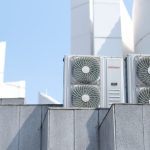
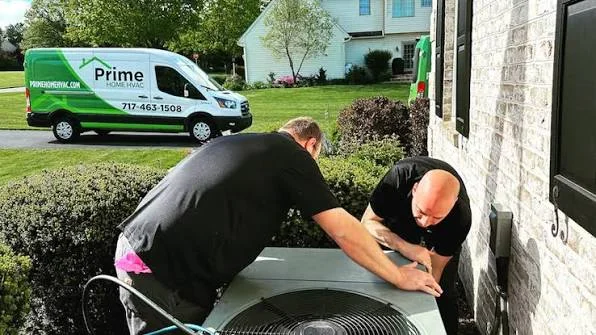
The condenser coil on your outdoor unit is where heat gets dumped outside. When dust, grass clippings, cottonwood fluff, and grime coat the coil’s fins, that heat transfer slows down. The compressor has to run longer and at higher pressure to move the same amount of heat.
Studies from the Department of Energy and industry groups consistently put the efficiency penalty of dirty condenser coils in the range of 5 to 15 percent, with severely fouled coils doing even worse. On our baseline $350 summer, that is $18 to $52 per season for mild fouling, and considerably more if the unit sits under a cottonwood tree and has never been cleaned.
The evaporator coil inside is the sneakier problem. It sits in the dark, collecting dust that slips past the filter, and often grows a layer of grime mixed with moisture. A dirty evaporator coil chokes heat absorption, which means longer run times and colder supply air that never quite reaches the rooms it should. Homeowners respond by setting the thermostat lower, which compounds the waste.
The Filter Problem: Small Part, Big Bill
A clogged air filter is the cheapest problem to fix and the most commonly ignored. As the filter loads up, airflow through the system drops. The blower works harder to push air through the resistance, and the whole system runs longer to deliver the same cooling.
The energy penalty from a badly clogged filter typically lands between 5 and 15 percent as well. But the filter’s real cost shows up downstream. Restricted airflow lowers the temperature across the evaporator coil, and once the coil surface drops below freezing, ice forms. An iced coil can lose nearly all cooling capacity while the system keeps running and drawing full power. Homeowners in this situation sometimes burn a full day of electricity, 20 to 30 kilowatt hours or more, cooling nothing.
Filters cost between $10 and $30. Changing one every one to three months, more often with pets, is the highest return maintenance task in your entire home. There is no other $15 action that protects a $6,000 machine this effectively.
Low Refrigerant: The Expensive Slow Leak
Here is a fact that surprises people: an air conditioner does not consume refrigerant. It circulates the same charge for its entire life. If the charge is low, there is a leak, and leaks cost money in two ways.
First, an undercharged system loses capacity and efficiency. Depending on how low the charge is, the penalty can reach 20 percent or more. Second, and less obvious, low charge causes the evaporator coil to run cold and eventually ice over, and it makes the compressor work under strain. A compressor that runs for years slightly starved of refrigerant is a compressor heading toward a $1,500 to $2,500 failure.
This is why refrigerant level checks belong in an annual service visit. Catching a leak early turns a $200 repair into a routine top off instead of a premature compressor replacement.
Duct Leakage: The Bill You Pay for Your Attic
Maintenance is usually discussed as if it only involves the equipment, but the duct system is part of the picture. The Department of Energy estimates that the typical duct system loses 20 to 30 percent of its air through leaks, disconnected joints, and poor insulation. That conditioned air cools your attic instead of your bedroom, and you pay for every bit of it.
If your ducts leak 25 percent of their airflow, your effective cooling cost rises by roughly a third. On our $350 baseline, that is over $100 per summer, every summer, for a problem that a one time sealing project usually fixes permanently. Any honest conversation about energy waste has to include the ducts, because a perfectly maintained AC pushing air through leaky ducts is still a wasteful system.
Adding It Up: A Realistic Annual Waste Estimate
Let’s build a worst case but entirely common scenario for a system that has gone three years without service:
- Dirty condenser and evaporator coils: 10 percent penalty, about $35 per season
- Clogged filter that has been in place for a year: 8 percent penalty, about $28
- Slightly low refrigerant from a slow leak: 12 percent penalty, about $42
- Duct leakage that was never addressed: 25 percent penalty, about $88
These penalties do not simply add, because some overlap, but even conservatively the combined effect is a 30 to 40 percent increase in cooling costs. On a $350 baseline, that is $105 to $140 wasted every summer. Stretch that across the 15 year life of a system and neglect quietly costs $1,500 to $2,000 in excess electricity, before counting a single repair bill.
Now compare that to an annual tune-up, which typically runs $120 to $350. One visit that catches the coil fouling, the filter, and the refrigerant leak pays for itself in a single season in this scenario. That is the math the brochures never show you, and it is also the honest caveat: a newer, well sealed system in a clean environment may waste far less, and its tune-up payback will be slower. The numbers reward homeowners who assess their own situation.
The Compounding Effect Nobody Mentions
There is one more layer to the math. Efficiency losses are not static. A dirty coil collects more dirt faster because grime attracts grime. A struggling compressor wears faster. A system that runs longer accumulates runtime hours on every moving part, which means capacitors, contactors, and fan motors all approach failure sooner. Neglect does not just raise your bill this summer. It raises the probability of a major repair next summer, and it shaves years off the equipment’s life, pulling a $7,000 replacement closer.
The Practical Takeaway
You do not need to memorize percentages. You need to remember three things. Change your filter on schedule, because it is the cheapest efficiency you can buy. Keep the outdoor unit clean and clear of debris, because coil fouling is the most common silent waste. And get the system professionally inspected once a year, because refrigerant leaks and electrical wear are invisible until they are expensive.
Your air conditioner will never send you an itemized bill for the energy it wastes. The numbers just blend into the monthly total, a little higher every season. Doing the math yourself, once, is usually all it takes to see maintenance for what it really is: not an upsell, but one of the better returns in home ownership.