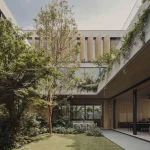



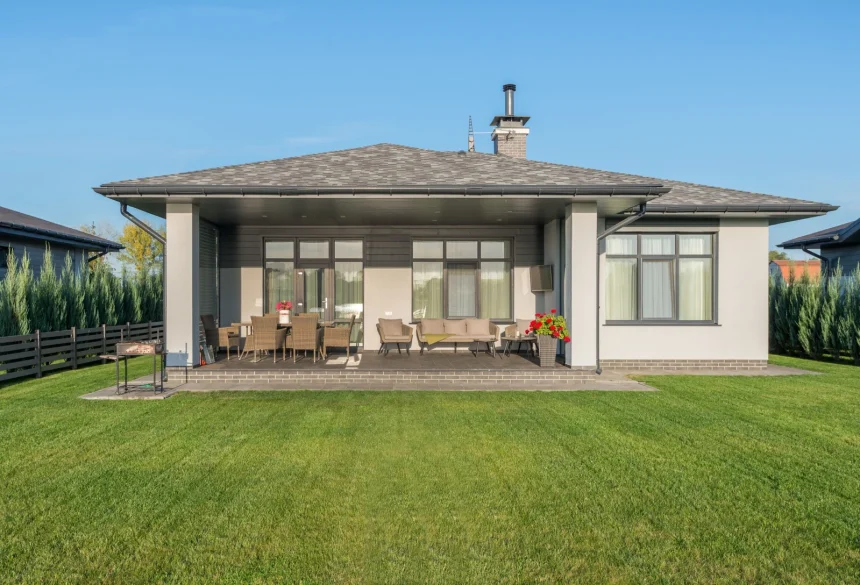
In a contemporary garden, surfaces have a powerful visual presence. Areas of paving, lawn, decking and gravel can occupy much of what you see, so their colour, scale and texture can influence the character of the entire space.
The strongest garden schemes rarely treat these materials as separate choices. Instead, surfaces can be considered alongside the architecture of the property, exterior finishes, planting and outdoor furniture. This creates a sense that each element belongs within the same design, even when contrasting materials are used.
Before choosing a finish for a large area, it is worth considering what is already present and how each proposed addition will interact with it.
Begin with the Architecture
The house provides a natural starting point for decisions about garden design. Look at its exterior materials, dominant colours, proportions and architectural details before choosing finishes for the space around it.
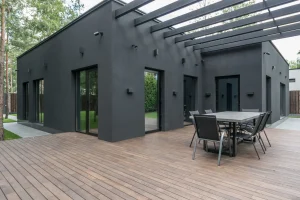
A modern extension with large areas of glazing and dark metal frames may suit a very different material palette from a period property with contemporary additions. Brick colour can also influence how paving, timber and other finishes appear when placed nearby.
Complementing the building does not necessarily mean matching it exactly. Subtle repetition can often be enough. Grey window frames, for example, might be echoed through planters or furniture rather than replicated across every garden surface.
It is equally useful to consider visual competition. If the architecture already has several striking materials or colours, a restrained garden palette can give those details room to stand out. Where the exterior is simpler, the garden may have greater scope for stronger contrasts and expressive textures.
Compare Materials in Their Intended Setting
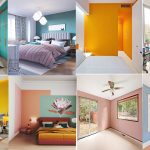
Samples viewed online, under showroom lighting or in isolation cannot always show how a finish will appear in a particular garden. Natural light changes throughout the day, while neighbouring colours can alter how warm, cool, light or dark a material appears.
For this reason, compare prospective finishes in the area where they will eventually be used. If a lawn alternative is being considered as one element within the design, viewing artificial grass samples at home allows different colours and textures to be considered alongside surrounding materials before a larger area is selected.
The same principle applies to paving, decking, gravel and exterior paint colours. Place samples beside existing brickwork, rendered walls or boundary materials. Look at them next to planting and outdoor furniture too.
Try viewing prospective finishes in morning light, direct sunshine and shade. A paving colour that appears subtle on a bright afternoon may have a stronger presence on an overcast day. Taking time to compare these relationships can produce a much more cohesive final scheme.
Create Contrast Through Texture
Contemporary design is sometimes associated with smooth surfaces and sharp lines, but using one type of finish throughout can leave an outdoor space feeling visually flat.
Texture brings depth. Large-format paving can sit beside softer planting, while timber introduces a different visual character alongside stone or rendered surfaces. Gravel can create another point of contrast, particularly around planting beds or between harder materials.
Plants are especially useful for softening strong architectural lines. Grasses, trailing varieties and plants with varied leaf shapes can introduce movement around structured paths, walls and seating areas.
Contrast does not need to mean introducing many different materials. Two or three carefully selected finishes can often create greater impact than a large collection competing for attention. Repeating those finishes elsewhere in the garden can then give the overall design a clear sense of rhythm.
Outdoor furniture also contributes to this mix. A slim metal dining set creates a different visual effect from substantial timber seating, even when placed on exactly the same surface.
Consider the View from Inside
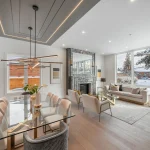
A contemporary garden is often highly visible from the interior, particularly in homes with bifold doors, sliding glazing or large picture windows. This makes the view outside part of the home’s visual environment throughout the year.
Stand at the places where you regularly see the garden. The kitchen sink, dining table, sofa or hallway may each provide a different sightline. Consider where paving changes direction, where planting interrupts a hard surface and which materials dominate the view.
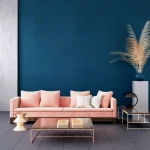
Repeating selected colours can help connect indoor and outdoor spaces. Interior timber tones might be referenced by garden furniture, for example, while dark interior details could be picked up through exterior planters or frames.
Continuity does not require the garden to resemble an outdoor living room. It simply means considering how the two spaces relate when seen together.
The most successful contemporary gardens tend to feel composed rather than assembled piece by piece. Architecture, surfaces, furniture and planting each contribute to the overall impression.
By comparing finishes in their intended setting, considering texture and studying the garden from both outside and inside the home, material choices can become part of one coherent design. The result is an outdoor space with a clear visual identity that feels naturally connected to the property around it.